What Affects Your Moving Cost in Toronto | G&T Moving Blog
Local moving in Toronto and the GTA is billed by the hour for the truck and the crew together, so the real question is not "what is your rate" — it is "what makes this job take longer than the same job down the street". Two three-bedroom homes with almost identical contents can differ by hours, and almost none of that difference comes from the number of boxes.
Most of it comes from access: the staircase, the basement doorway, how close the truck can park to the front door, and whether the crew has to put an item down twice. Those are the things worth describing when you ask for a quote, and they are the things this article walks through.
Key Takeaways
- A turn in the staircase, not the size of the house, is usually what decides whether you need two movers or three.
- How close the truck can get to the door changes the unload more than the volume does.
- Tight basement access is handled by disassembling before the carry — forcing a piece through is how walls and furniture get damaged.
- Wrapping and colour-coded room labels are protection, but they are also time savings on an hourly job.
- Pianos, marble, safes, and anything over about 200 lb need to be declared before the day, not discovered on it.
The Four Things That Decide Your Hours
Truck access, the staircase, protection, and staging. None of them show up on a floor plan; all of them show up on the invoice.
The hourly rate is the starting point, not the price
Our published rates cover the vehicle and the crew together — $60 per hour for one mover with a pickup truck, $100 per hour for two movers with a 17 ft or 26 ft truck, and up to $195 per hour for four movers with a 26 ft truck. Local jobs carry a two-hour minimum and then bill in 30-minute increments, with a fuel and travel surcharge based on distance and job locations.
What you actually pay is that rate multiplied by how long the building lets us work. Everything below is about that second number.
- Crew size and truck size set the hourly rate.
- Access conditions set the hours.
- Special items and materials sit on top of both.
Crew size is decided by the staircase, not the square footage
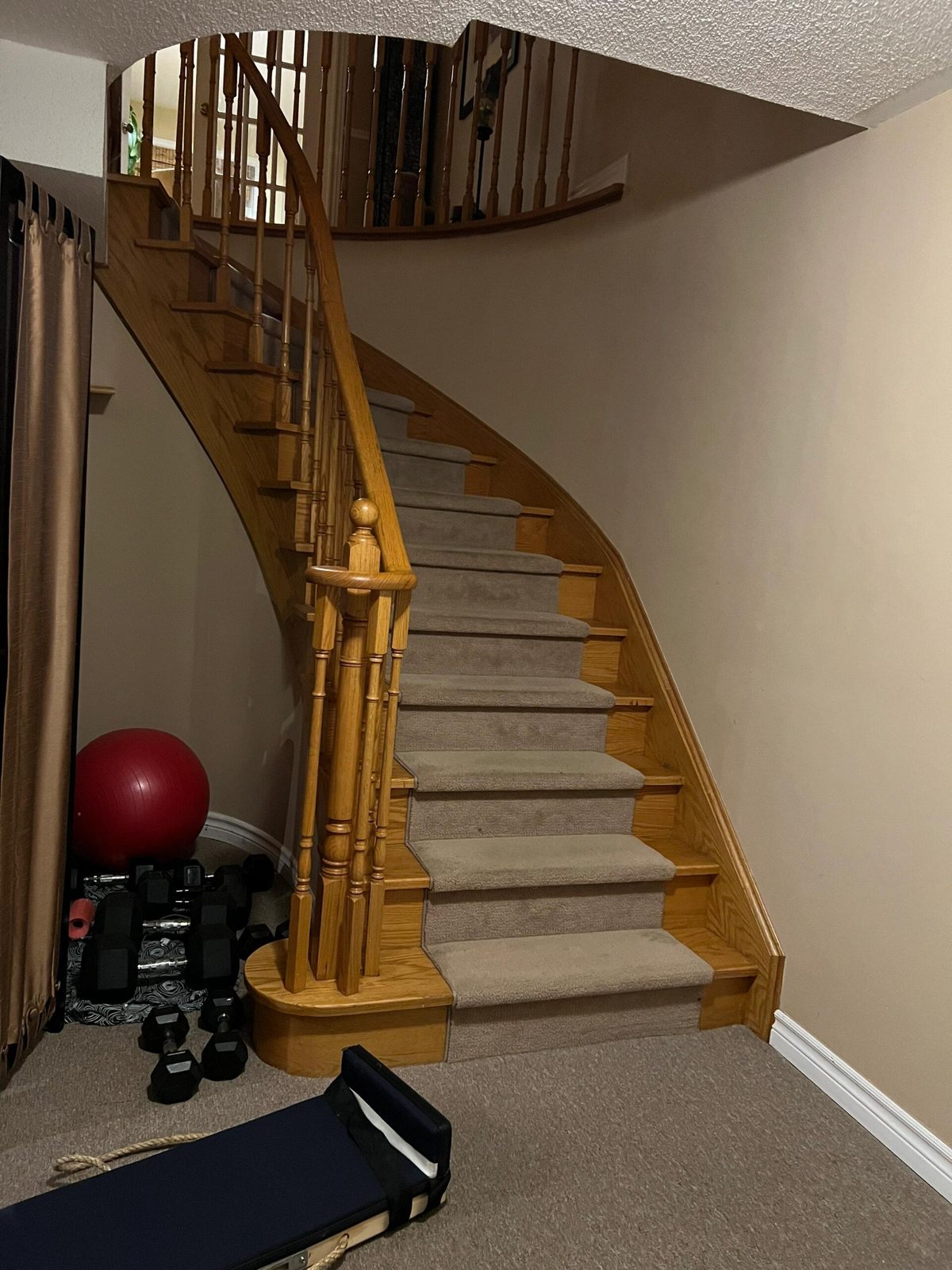
This is the factor customers underestimate most often. A two-storey townhouse with a turn part-way up the staircase is a three-mover job for beds, wardrobes, and pianos — not because the pieces are heavier there, but because of the corner. With two movers, a large item has to be pivoted at the turn, and that pivot is where railings get gouged, drywall gets scraped, and the furniture itself takes the hit.
A third mover controls the piece through the turn instead of wrestling it. The hourly rate is higher, but the carry is faster and the repair bill is zero. On a straight-run staircase or a bungalow with the same contents, two movers are usually the right call. Tell us which one you have and we will size the crew to it before the day rather than discovering it on the landing.
Basements and other tight access: disassemble, do not force
The stairwell and doorway into a finished basement are typically the narrowest passage in a GTA house. Sectionals, bed frames, treadmills, and large shelving units rarely come up intact. The right answer is to disassemble before the carry, which adds predictable minutes, rather than forcing the piece through, which adds unpredictable damage.
Basic disassembly and reassembly for beds, tables, shelving, treadmills, and washing machines can usually be arranged when it is disclosed at booking. Raised on the day, with no notice and no tools planned for, it costs more time and may carry an extra charge.
How close the truck can get to the door
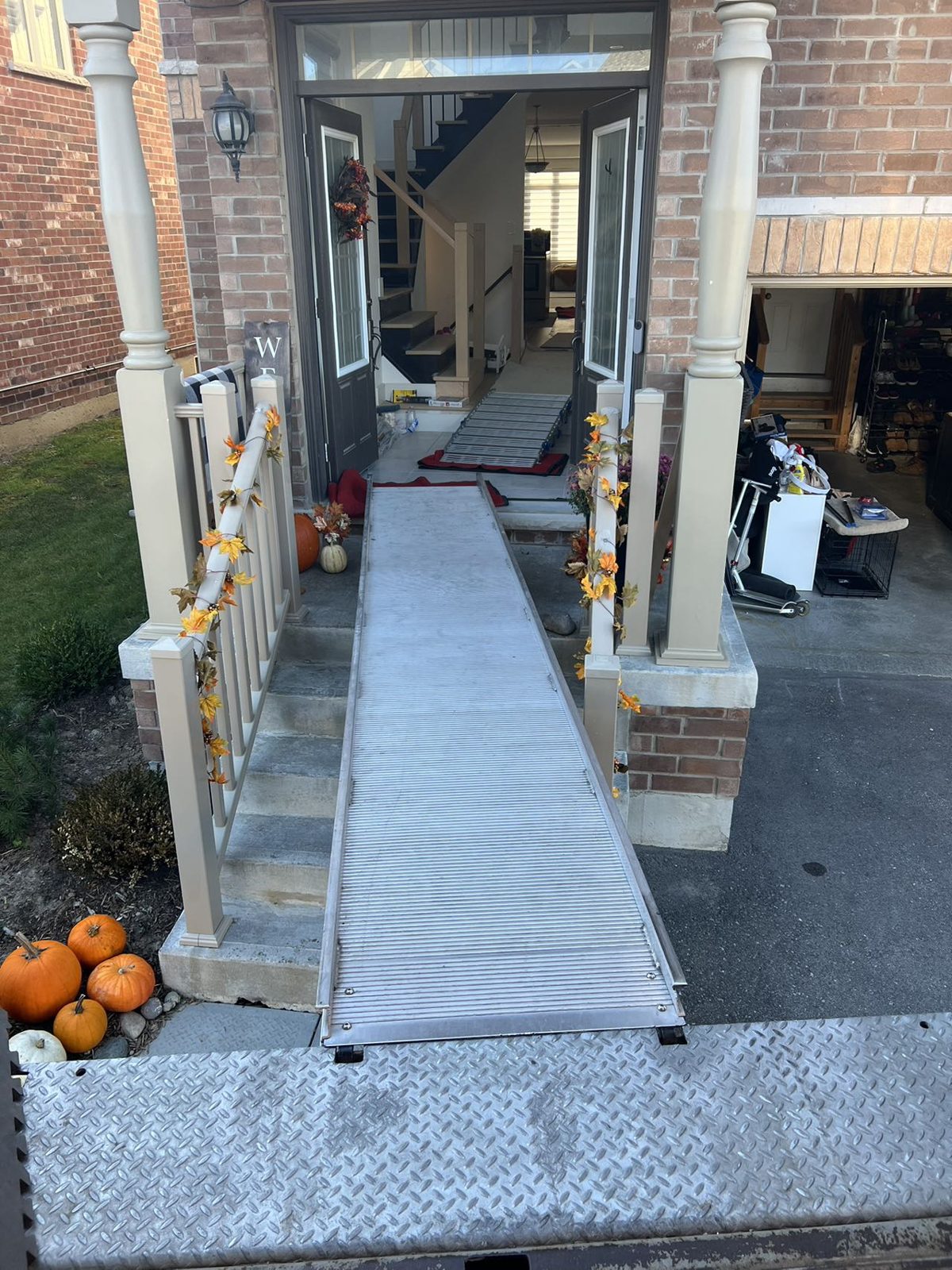
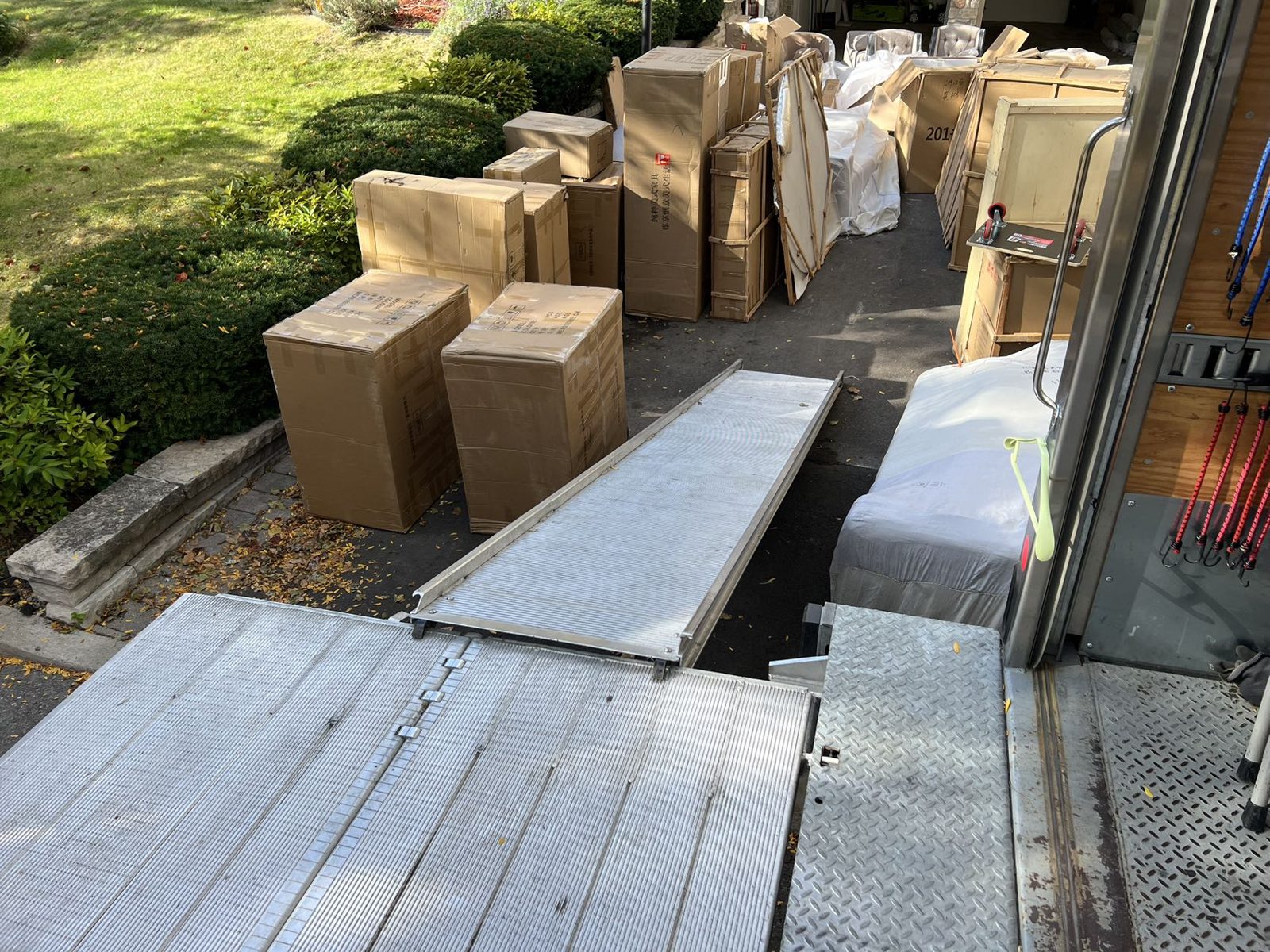
This one is invisible on a floor plan and obvious on the invoice. When a driveway is wide and the entry is level — common for detached homes in Richmond Hill, Markham, and much of York Region — a 26 ft truck can be ramped straight to the front door. Items come off onto a four-wheel platform cart and roll directly to the room they belong in.
When the truck has to stop short, every single item goes through a longer sequence: down on the liftgate, re-strapped onto a hand truck, walked across the driveway, then carried in. That is the same furniture and the same crew taking substantially longer. Long, sloped, or gravel driveways, rear-lane townhouses where the truck cannot enter the lane, and downtown condos where the loading bay is not the lobby all fall into this category.
For condo and high-rise moves the equivalent factor is the service elevator: the booked window, the loading bay time limit, and the garage clearance height if the bay is underground. Book the elevator before you book the truck — the building, not the crew, sets the schedule.
Protection and labelling are also time
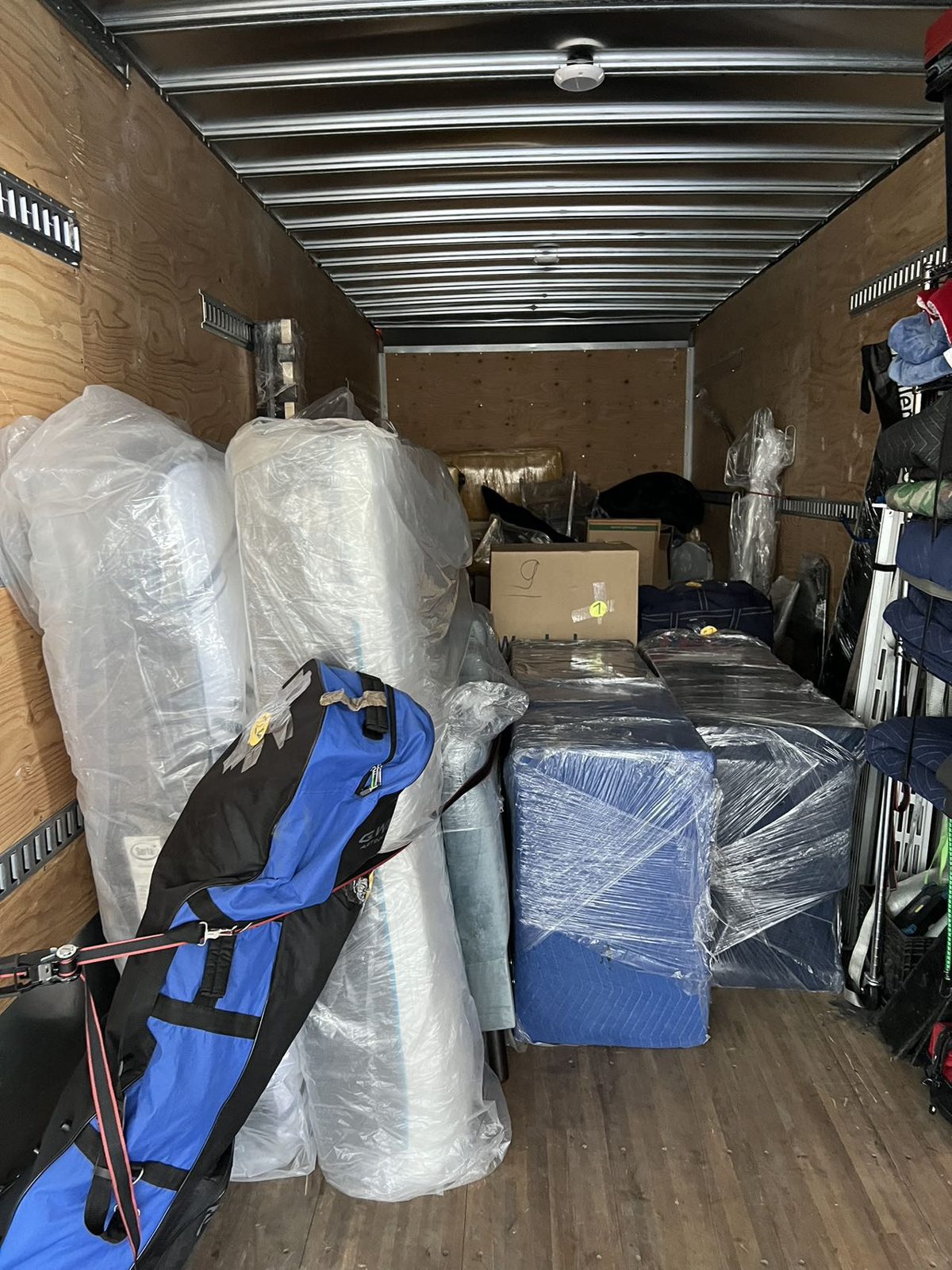
We wrap furniture and mattresses in plastic film before anything leaves the room. The obvious reason is to protect the item. The less obvious one is that most move-day damage happens to the building — walls, railings, door frames — and a wrapped piece is far gentler on everything it brushes past.
We also tag items with colour-coded stickers at the loading end, matched to rooms at the destination. It sounds like a small thing. On an hourly job it is not: without it, boxes and furniture get stacked in the hallway and then carried a second time once someone decides where they go. You would be paying for that second carry.
Special items: declare them before the day
Pianos, safes, marble and stone tops, glass cabinets, large appliances, and single pieces over roughly 200 lb need specific equipment — liftgate trucks, piano skid boards, specialty dollies — and often an additional mover. They may carry an extra charge, and that is fine when it is quoted in advance.
What does not work is a piano that appears on moving day. The crew and truck were sized for something else, and either the item does not move or the whole schedule slips. Send photos with the quote request; it takes a minute and it is the single best thing you can do for quote accuracy.
Distance, surcharge, and who is actually doing the work
Time starts when the vehicle arrives at your scheduled location, not when loading begins inside. A fuel and travel surcharge is added based on vehicle type, distance, and the actual job locations — a cross-GTA move and a move within one neighbourhood are not the same trip.
One factor that never shows up on a rate card: whether the company doing the estimate is the company doing the move. We use our own crew rather than a third-party labour agency, and the owner works the job, which means there is someone on site who can make a decision and be held to it. If you are comparing quotes, it is a fair question to ask whoever else you are calling.
What to send for an accurate quote
The fastest way to get a real number instead of a range is to send the details that decide the hours.
- Both addresses, and the building type at each end (house, townhouse, condo, apartment).
- Stairs: how many flights, and whether there is a turn in them.
- Basement contents, and anything that will need disassembly.
- Elevator booking window, loading bay rules, and garage clearance for condos.
- Driveway and parking: how close can a 26 ft truck actually get?
- Photos of pianos, safes, marble, glass, appliances, and anything over about 200 lb.
Testimonials
Real customer reviews
If you are planning a move, piano job, or heavy-item delivery, these reviews give a better sense of the real service experience.
“We moved a four-bedroom home from Toronto to Ottawa, including a piano, and everything arrived safely. The crew was professional, punctual, careful, and made the whole move feel far less stressful.”
Jackson G.
Long-distance house move with piano
“The team arrived on time, worked efficiently, handled our belongings with care, and kept communication clear from start to finish. The whole process was smooth and stress-free.”
Yaya H.
Smooth and efficient moving day
“They worked efficiently without wasting time, had a great attitude, and offered a very reasonable price.”
Wendy X.
Fast service with fair pricing